About All Tours National Reserve ToursFrom Lima ToursBuggy ToursBoat ToursBallestas Islands ToursParacas & Huacachina Directions Hours & Fees
Find Tours 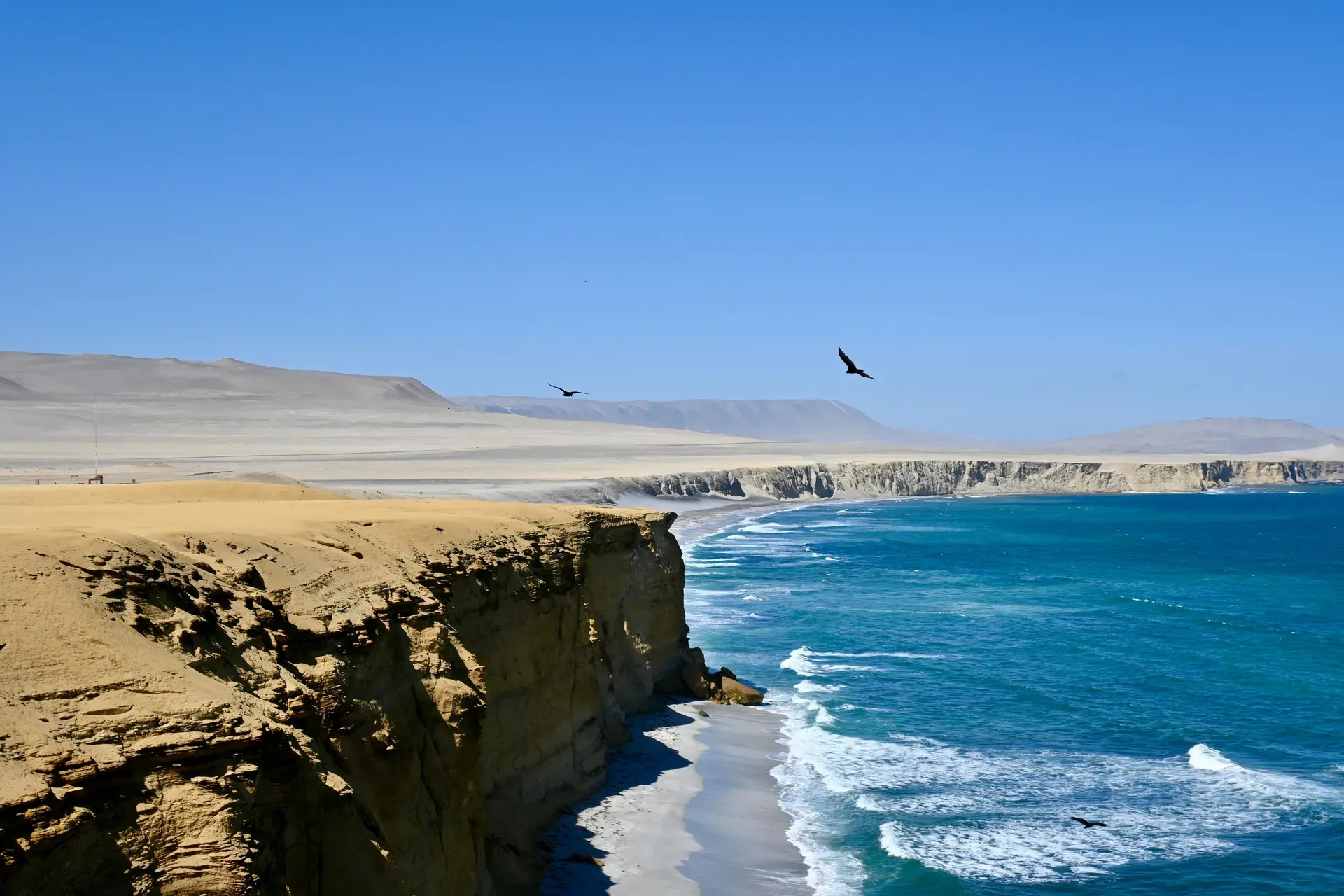
Paracas occupies a hyper-arid peninsula 260 kilometers south of Lima, where ochre desert dunes drop directly into the Pacific Ocean. The 335,000-hectare reserve protects massive seabird colonies and the archaeological remains of a 2,800-year-old Andean society.
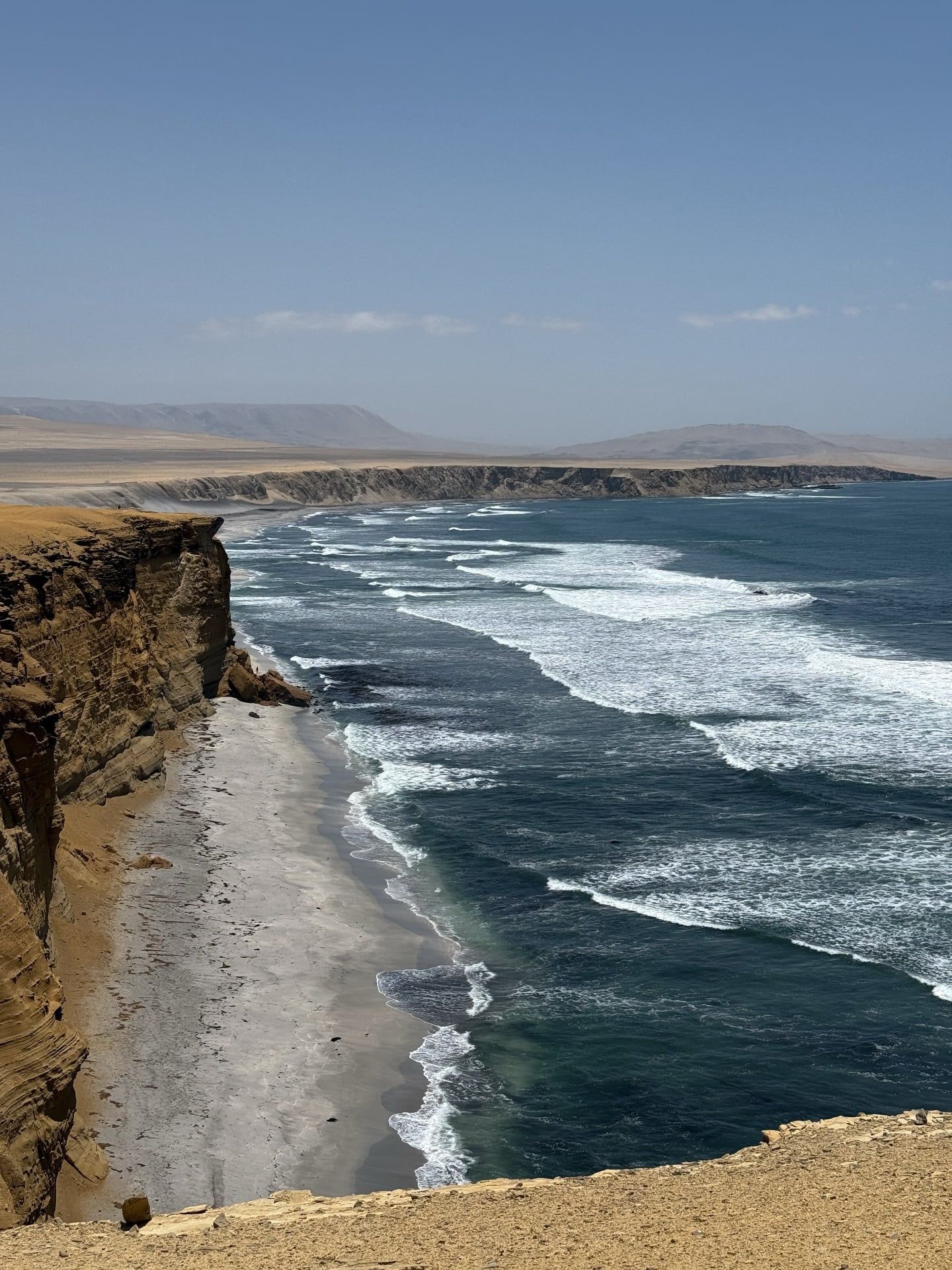
Ochre red, yellow, and gold sediments collide with the cold, nutrient-dense Peru Current 260 kilometers south of Lima. Paracas protects 335,000 hectares of hyper-arid coastal desert and marine habitats across a hammerhead-shaped peninsula. Visitors step onto shores sitting at sea level, where winds whip loose sand across barren plains and ocean waves undercut jagged basalt cliffs. The ecosystem here supports the highest concentration of seabirds globally. Hundreds of thousands of cormorants, boobies, and pelicans coat the rocky outcrops of the offshore Ballestas Islands in a thick layer of white guano. The reserve boundaries extend three nautical miles out to sea, safeguarding the underwater kelp forests and breeding grounds from commercial trawlers.
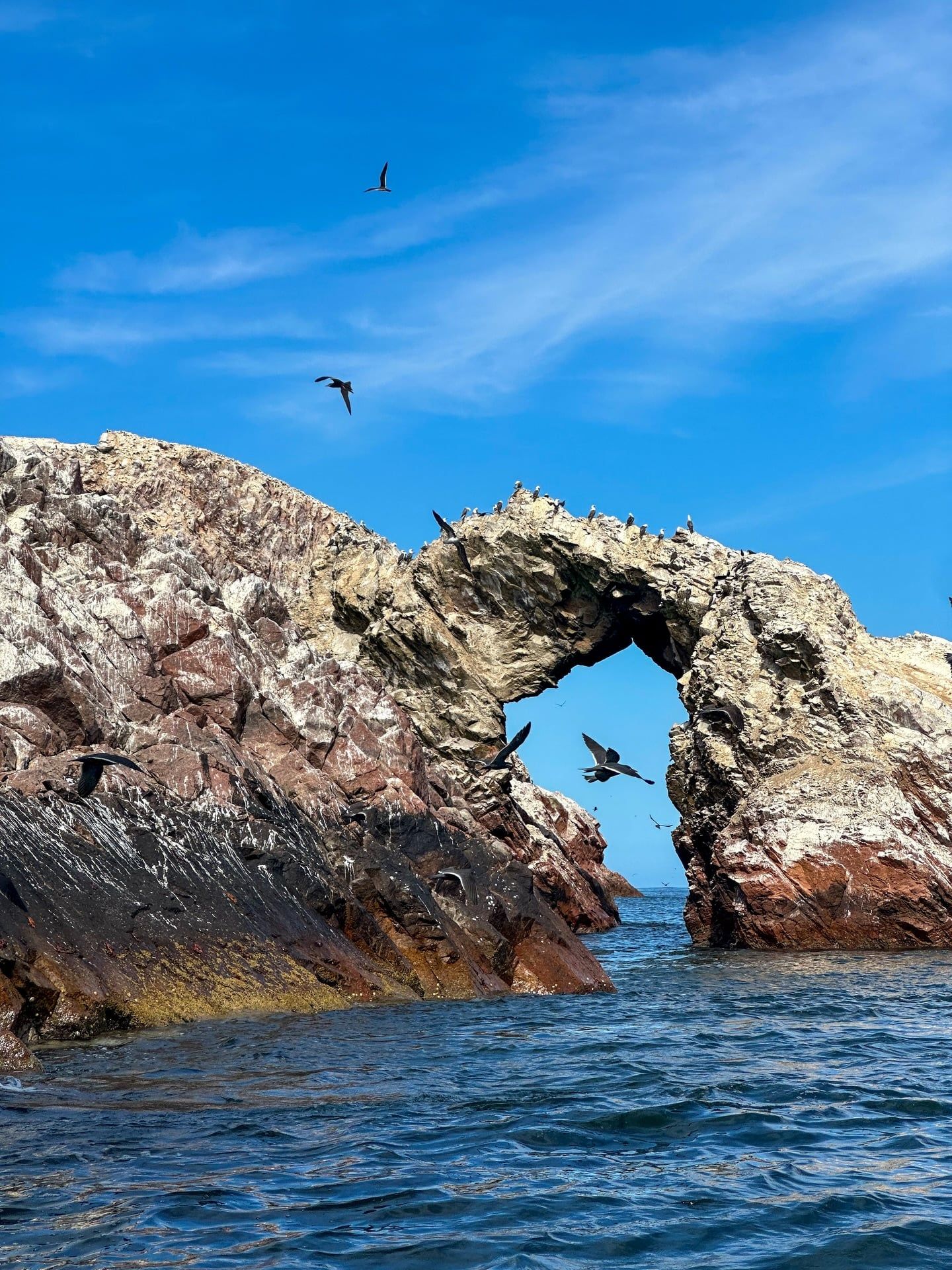
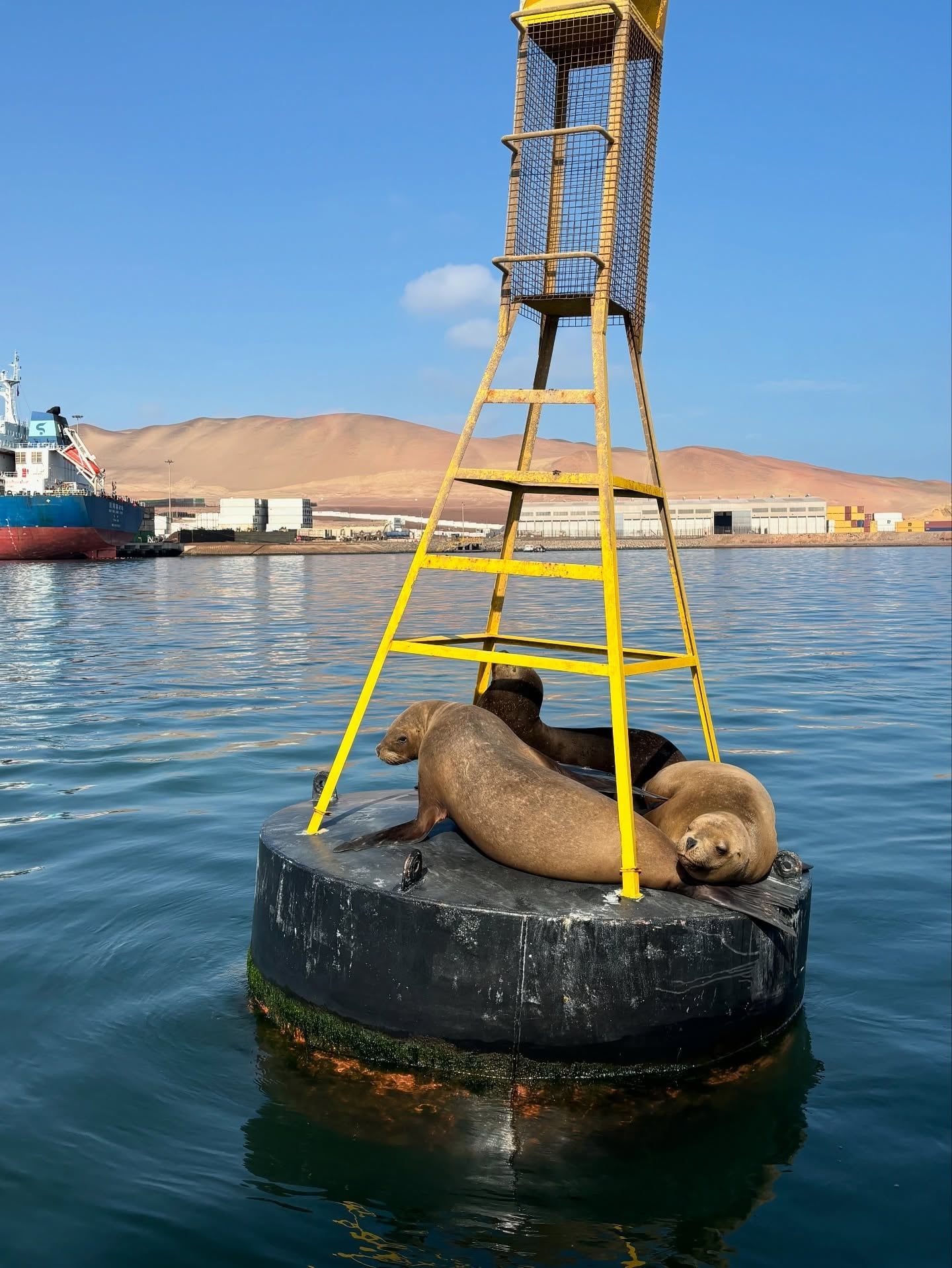
Travelers base themselves in the small town of El Chaco to access the reserve. Speedboats depart daily between 08:00 and 10:00, bouncing across choppy swells to reach the island sanctuaries. The open ocean crossing routinely triggers motion sickness. Salt spray coats cameras and clothing long before the boats idle near sea lion colonies. Humboldt penguins nest in the shaded crevices of these islands, hunting anchovies in the freezing waters below. On land, a paved road network allows access to isolated viewpoints like Playa Roja, where iron-rich cliffs erode into bright reddish-orange sand. Strong afternoon winds often blast the coastline, dropping visibility and making outdoor exploration difficult. Travelers arriving by bus from Lima disembark directly into the dusty streets of El Chaco, where seafood restaurants line the waterfront promenade. The contrast between the barren, lifeless dunes and the chaotic, noisy marine colonies defines the entire experience.
Access requires a standard entry ticket costing 11 soles for adults and 3 soles for minors. A promotional 17-soles pass covers both the mainland reserve and the Ballestas Islands sector. Early morning arrivals avoid the worst of the desert gales and secure calmer sea crossings. Renting a scooter in town for 22.50 euros provides complete control over your schedule, bypassing rigid tour bus itineraries. The reserve operates daily from 09:00 to 16:00 via the Santo Domingo Checkpoint. Visitors must bring their own water and sun protection, as services vanish entirely once you leave the entrance gates.
An influential Andean society engineered deep shaft tombs into the Cerro Colorado desert between 800 BCE and 100 BCE. Peruvian archaeologist Julio C. Tello excavated these massive burial complexes in the 1920s, uncovering hundreds of mummies wrapped in complex, brightly colored textiles. Tello separated the findings into two distinct eras. The Paracas Caverns period, beginning around 400 BCE, featured bottle-shaped tombs dug deep into the rock. Families placed multiple bodies inside these communal vaults over generations. The later Paracas Necropolis period, evolving by 200 CE, shifted to shallow, sprawling graveyards holding individual graves. These ancient people practiced advanced cranial surgery. Surgeons drilled geometric holes into skulls to relieve pressure from battle wounds. Bone regrowth on the excavated remains proves many patients survived the brutal procedure and lived for years afterward.
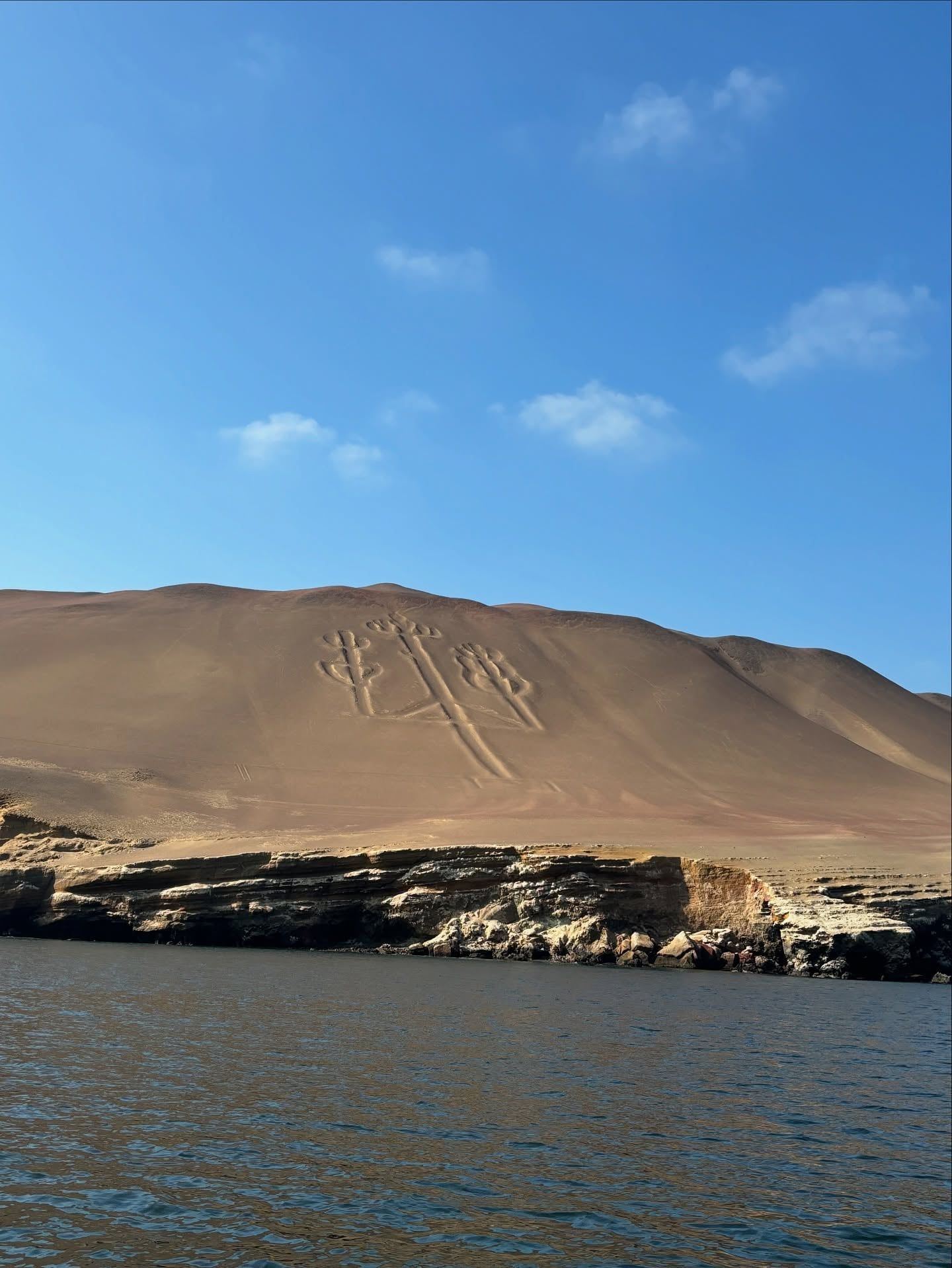
A 183-meter-tall geoglyph dominates the northern ridge of the peninsula. Etched directly into the hardened sand more than 2,500 years ago, the Paracas Candelabra resembles a massive, three-pronged fork. The creators dug trenches up to two feet deep, using stones to reinforce the borders against the relentless coastal winds. Archaeologists still debate its exact purpose. Some theories suggest it acted as a navigational beacon for ancient sailors navigating the treacherous coastline. Others link the shape to the hallucinogenic San Pedro cactus used in religious rituals by coastal shamans. The site remains strictly off-limits to foot traffic today. Tour boats idle 50 meters offshore, providing the only legal vantage point for photography.
The nearby Chincha Islands triggered a global economic frenzy in the 1840s. Millions of seabirds had deposited mountains of nitrogen-rich excrement over centuries, creating the world's most potent natural fertilizer. Peru exported millions of tons of this guano to Europe and North America. The resulting wealth funded massive infrastructure projects in Lima, including railroads and public monuments, before the resource depleted entirely. The guano miners worked in brutal conditions, inhaling toxic dust while hacking away at deposits that reached 50 meters thick. Decades of overfishing and habitat destruction followed the collapse of the guano trade. The Peruvian government established the Paracas National Reserve in 1975 to halt this ecological decline. The protected zone now covers 335,000 hectares, shielding 216 bird species and 36 mammal species from industrial exploitation. A massive 8.0 magnitude earthquake struck the region in 2007, fracturing the peninsula and collapsing the famous La Catedral rock arch into the sea. The remaining jagged pillars still draw thousands of visitors, though the unstable cliff edges pose a constant hazard. Park rangers enforce strict boundaries at these viewpoints to prevent fatal falls.
The Paracas Peninsula juts into the Pacific Ocean like a massive hammerhead, sitting at an elevation of zero to two meters above sea level. This hyper-arid desert receives almost zero annual rainfall. The landscape consists of hardened sand, salt flats, and jagged basalt cliffs carved by relentless wind and wave action. Playa Roja stands out against the pale desert floor. The beach gets its bright reddish-orange color from the erosion of a nearby granodiorite massif. The iron-rich magma inside this rock cooled and oxidized over millions of years, washing down to the shoreline. Visitors cannot walk on the red sand, as park authorities restrict access to a paved observation deck to prevent degradation of the unique geological feature.
Offshore, the Humboldt Current drives the entire ecosystem. This cold, nutrient-dense river of seawater flows north from Antarctica, pushing deep ocean water to the surface along the Peruvian coast. Microscopic phytoplankton bloom in massive numbers, feeding vast schools of anchovies. This localized food web supports 36 mammal species and 216 bird species. Sea lions haul out onto the rocky shelves of the Ballestas Islands, barking constantly over the roar of the surf. Bull sea lions defend their territories aggressively, often clashing on the slippery rocks. Humboldt penguins navigate the steep, guano-covered slopes, nesting in shallow caves to escape the intense equatorial sun. These flightless birds dive up to 30 meters deep to hunt small fish.
The desert winds dictate daily conditions. Mornings usually bring calm, glassy waters perfect for boat navigation. By noon, thermal differences between the hot desert and the cold ocean generate fierce gales known locally as Paracas winds. These gusts can reach speeds of 60 kilometers per hour. They whip loose sand into blinding dust storms and churn the ocean into dangerous swells. Tour operators cancel afternoon boat departures entirely when these conditions peak. The mainland reserve features a 34-kilometer dirt track loop connecting the major viewpoints, including the Mirador Istmo de la Península. From this high vantage point, the ocean appears on both sides of the narrow land bridge. Cyclists attempting this route face punishing headwinds and zero shade. Dehydration sets in quickly. Smart travelers tackle the loop in motorized buggies or air-conditioned vans, carrying at least three liters of water per person.
The Paracas culture left behind some of the most complex textiles ever discovered in the Americas. Weavers used camelid wool and cotton to create massive burial mantles, dyeing the threads in over 190 distinct shades of red, blue, yellow, and green. These fabrics did not just cover the dead. They acted as historical records, depicting shamans, local wildlife, and severed trophy heads. The intricate embroidery required thousands of hours of labor, indicating a highly stratified society where elite individuals commanded massive resources for their journey into the afterlife. Archaeologists found up to 40 layers of these textiles wrapped around a single mummy in the Cerro Colorado tombs.
Modern Peruvians view the peninsula as a crucial link to their pre-Inca origins. The Julio C. Tello Site Museum, located near the reserve entrance, houses dozens of these recovered artifacts. The exhibits explain the complex mummification process, which involved removing internal organs and treating the bodies with natural resins to halt decomposition. Locals continue to rely on the marine environment, operating small-scale artisanal fishing fleets out of El Chaco. These fishermen launch wooden skiffs before dawn, hunting flounder and corvina using traditional hand-line techniques passed down through generations.
The ancient Candelabra geoglyph remains a potent symbol of regional identity, featuring prominently in local art, textiles, and tourism materials. Strict laws now protect the drawing. The Peruvian Ministry of Culture monitors the site with drones and ground patrols. Anyone caught trespassing on the sandy hillside faces severe legal penalties, including heavy fines and potential jail time. This aggressive enforcement ensures the 2,500-year-old etching survives the modern influx of coastal tourism. Visitors must engage authorized guides to learn the oral histories surrounding the site, as no written records exist from the original creators. Annual festivals in the nearby city of Pisco celebrate the region's maritime heritage, blending Catholic traditions with indigenous reverence for the ocean. The sea remains the primary provider, just as it was for the weavers and surgeons who ruled this desert three millennia ago.
Paracas surgeons successfully drilled holes into human skulls to treat head trauma, with bone regrowth proving patients survived.
Ancient weavers created burial mantles using camelid wool dyed in 190 distinct shades of red, blue, yellow, and green.
The reserve hosts a large population of Humboldt penguins, which nest in the shaded crevices of the rocky islands.
Bird excrement from the nearby islands was so nitrogen-rich it fueled a massive global fertilizer trade in the 1840s.
The creators of the Paracas Candelabra placed stones along the edges of the two-foot-deep trenches to prevent wind erosion.
A massive 2007 earthquake collapsed La Catedral, a famous natural rock arch that once stood on the reserve's coastline.
Playa Roja gets its striking reddish-orange color from the erosion of a nearby granodiorite massif containing oxidized iron.
The journey takes 3.5 to 4 hours along the Pan-American Highway. The route covers 260 kilometers south of the capital.
Standard daily entry costs 11 soles for adults and 3 soles for children. A promotional 17-soles ticket covers both the reserve and the Ballestas Islands.
Humboldt penguins are migratory and best viewed from April to November. Sea lions inhabit the islands in large numbers throughout the entire year.
The mainland reserve opens daily from 09:00 to 16:00. Ballestas Islands boat tours operate strictly in the mornings between 06:00 and 13:00.
Visitors cannot disembark on the islands. The government strictly protects the marine sanctuaries, restricting observation to authorized tour boats.
The Candelabra is a 183-meter-tall geoglyph etched into a desert hillside. It dates back over 2,500 years and is best viewed from the ocean.
No direct commercial flights operate between Lima and Paracas. Travelers can book private charter flights to the nearby Pisco Airport, located 15 minutes away.
The desert oasis of Huacachina sits 75 kilometers away. The drive takes about 1 hour and 15 minutes by car or bus.
Paracas maintains low levels of violent crime, making it safe for tourists. Visitors should secure valuables against petty theft in crowded bus terminals.
Pack a windbreaker, sunglasses, and a sunhat. The intense equatorial sun requires high-SPF sunscreen, while strong coastal winds drop temperatures significantly in the afternoon.
Browse verified tours with free cancellation and instant confirmation.
Find Tours